
Spider Solitaire looks calm on the surface, but strong play is all about structure. You are not simply moving cards until something works; you are managing space, timing reveals, and preserving flexibility so one good move becomes five. This guide keeps that depth practical for short sessions in the browser.
What Spider Solitaire is really asking you to solve
At first glance, Spider feels like pure cleanup: build descending sequences and remove complete runs. The deeper puzzle is resource control. Every column, every face-down card, and every empty space acts like a small budget. Spend that budget carelessly and your next deal from stock can lock the tableau. Spend it well and you create chain reactions that clear large sections quickly.
That is why Spider works so well as a “short-break” game: each session has visible micro-objectives. You can finish a meaningful checkpoint without committing to a long run, then come back later with a cleaner board and clearer decisions.
The three priorities that outperform random clicking
- Reveal hidden cards early. Face-down cards are uncertainty. Reducing uncertainty is usually stronger than making a fancy visible move that changes little.
- Protect at least one empty column. Empty columns are your tactical engine. They let you temporarily park stacks, reorder traffic, and rescue awkward runs.
- Build same-suit continuity when possible. Mixed runs can keep play alive, but same-suit chains are what actually finish cleanly and leave fewer future headaches.
In Spider, “good now” and “good later” are different. The best move improves both.
Common mid-game trap: progress that is not progress
Many players lose after a streak of legal-looking moves because they optimize the wrong metric. The board may look tidier, but decision quality has dropped: fewer legal transfers, no spare column, and hidden cards still buried. That is fake progress.
Real progress has signals you can spot quickly:
- you reduced the number of blocked face-down cards,
- you increased movement routes between columns,
- you preserved or created empty-column utility,
- you made the next stock deal safer, not riskier.
A practical 2-6 minute decision loop
When you only have a short break, use this repeatable loop instead of trying to “solve the whole game” in one burst:
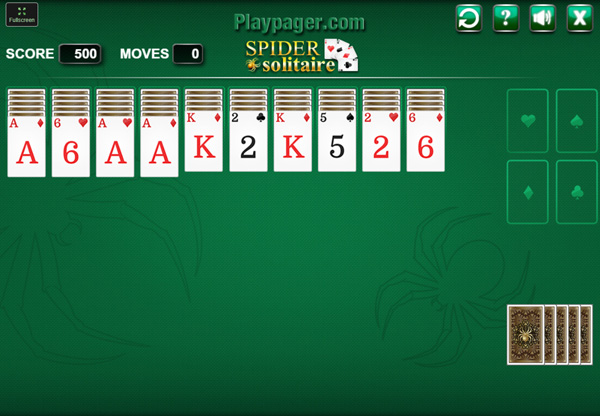
- Scan for reveals first. Ask: “Which move exposes a hidden card with the smallest strategic cost?”
- Stabilize space. Keep one column as a maneuver lane whenever possible.
- Upgrade run quality. Merge fragmented stacks into cleaner same-suit sequences.
- Then consider stock. Deal only when no high-value reveal or merge remains.
This loop turns quick sessions into consistent board improvement, even when you cannot finish a full game.
Five avoidable mistakes that make Spider feel harder than it is
- Dealing stock too early. Extra cards are not “more chances” if they land on unresolved clutter.
- Burning empty columns on low-value moves. Treat empty space as premium tactical capital.
- Overvaluing immediate stack length. A longer mixed run can be weaker than a shorter clean route to a reveal.
- Ignoring suit cleanup windows. If a same-suit merge is available now, delaying it often creates future friction.
- Playing fast because the board looks calm. Spider punishes one rushed placement by locking two or three future routes.
Why this version is useful for focus breaks
Unlike high-speed arcade loops, Spider gives you low-noise thinking reps: scan, plan, execute, reassess. That rhythm can reset attention without overloading it. You still get fast feedback, but it is strategic feedback—better structure, fewer dead ends, cleaner endings.
On Do Not Disturb Me, Spider Solitaire opens instantly in-browser, so you can run one purposeful mini-session and return to work with your brain less scattered than before.
Try one high-quality objective on your next run
Pick exactly one goal before you start: “I will preserve one empty column,” or “I will prioritize reveals over cosmetic cleanup.” Keep it measurable. Even if you do not clear the full layout, you will finish with better decisions than a random-click session—and those decisions compound over time.
Open a round of Spider Solitaire, play slow for six minutes, and judge success by board quality, not just completion.