Source:
playpager.com
The game publisher may show advertisements inside the game.
Klondike Solitaire is the classic “Solitaire” everyone recognizes
Klondike Solitaire (often simply called Solitaire, especially in the U.S. and Canada) is a classic single-player card game built around two ideas: a tidy tableau of descending card sequences, and a draw pile that reveals new options when you run out of moves. Every decision helps you uncover hidden cards and build steady progress toward the foundations.
A quick history of Klondike
Klondike has deep roots in the patience (solitaire) family of games. Historical rule descriptions of the version known today appear in the early 1900s—first documented as “Seven-Card Klondike” (1907), and later standardized so the familiar Klondike layout uses a more streamlined dealing approach (1913).
The name “Klondike” is also widely discussed. Some authors suggest a connection to the late 19th-century Klondike Gold Rush, but there’s no universally accepted, fully proven origin. One frequently mentioned historical association is with Richard Canfield and the era of popular resort entertainment in the 1890s, which is why you may see his name linked to the game in some histories.
Today, Klondike’s modern popularity grew even more thanks to the game’s inclusion as part of Microsoft Windows in the 1990s, bringing it to a huge global audience.
Objective
Your goal is to move all cards to the four foundation piles, one for each suit, building in order from Ace → King.
How to play Klondike Solitaire
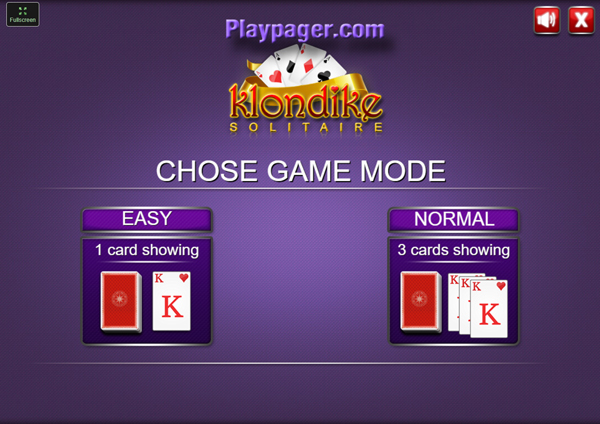
- Start - Press Play, then pick your preferred game mode (commonly different ways of dealing the stock).
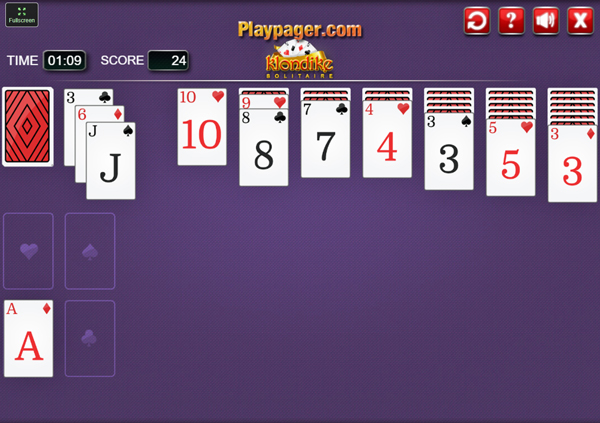
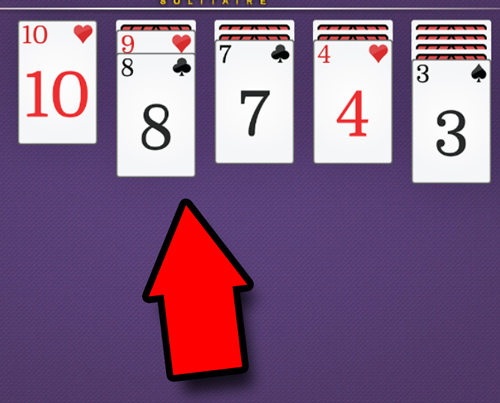
- Layout - Seven tableau piles are arranged in a row, each with one more card than the previous pile.
- Face-up and face-down - As the game progresses, any face-down cards that become uncovered can be played.
- Tableau rules - Build tableau piles in descending order and alternate colors.
- Foundations - Move matching cards to the foundations as they become available, starting with the Ace.
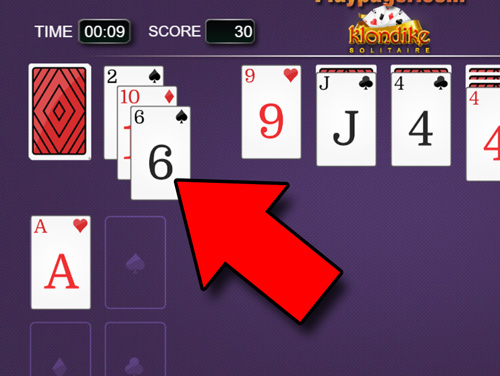
- Draw pile (stock) & waste - When you get stuck, use the stock to reveal new cards to the waste pile (the exact behavior depends on your selected mode).
- Empty tableau - If a tableau space becomes empty, it can usually be filled with a King (or a valid King-led sequence, depending on the rule set your mode uses).
Strategy tips that improve your chances
- Uncover first - Try to prioritize moves that reveal face-down cards so your tableau keeps expanding.
- Build with purpose - Before moving a card, consider whether it helps you create a clean descending, alternating-color chain.
- Use foundations to reduce clutter - When you can safely move a card to a foundation, doing so often opens new tableau connections.
- Be careful with blocked spots - Some “looks good right now” moves can limit future options—watch how many moves they unlock (or lock).
- Deal mode matters - “Draw 1” tends to give more control, while “Draw 3” can change which cards reach the waste and when.
Because Klondike Solitaire combines tableau-building with draw-pile timing, it’s a game of planning as much as it is moving cards. With a little practice, you’ll start recognizing which sequences are worth setting up and which moves lead to dead ends.
Screenshots